Why USB Ultrasonic Flaw Detectors Are Transforming Modern NDT Inspection
The Non-Destructive Testing (NDT) industry is rapidly embracing digital technologies that improve inspection efficiency, data management, and field mobility. Among these innovations, the USB ultrasonic flaw detector has become an increasingly popular solution for inspectors who require reliable performance in a compact and flexible format.
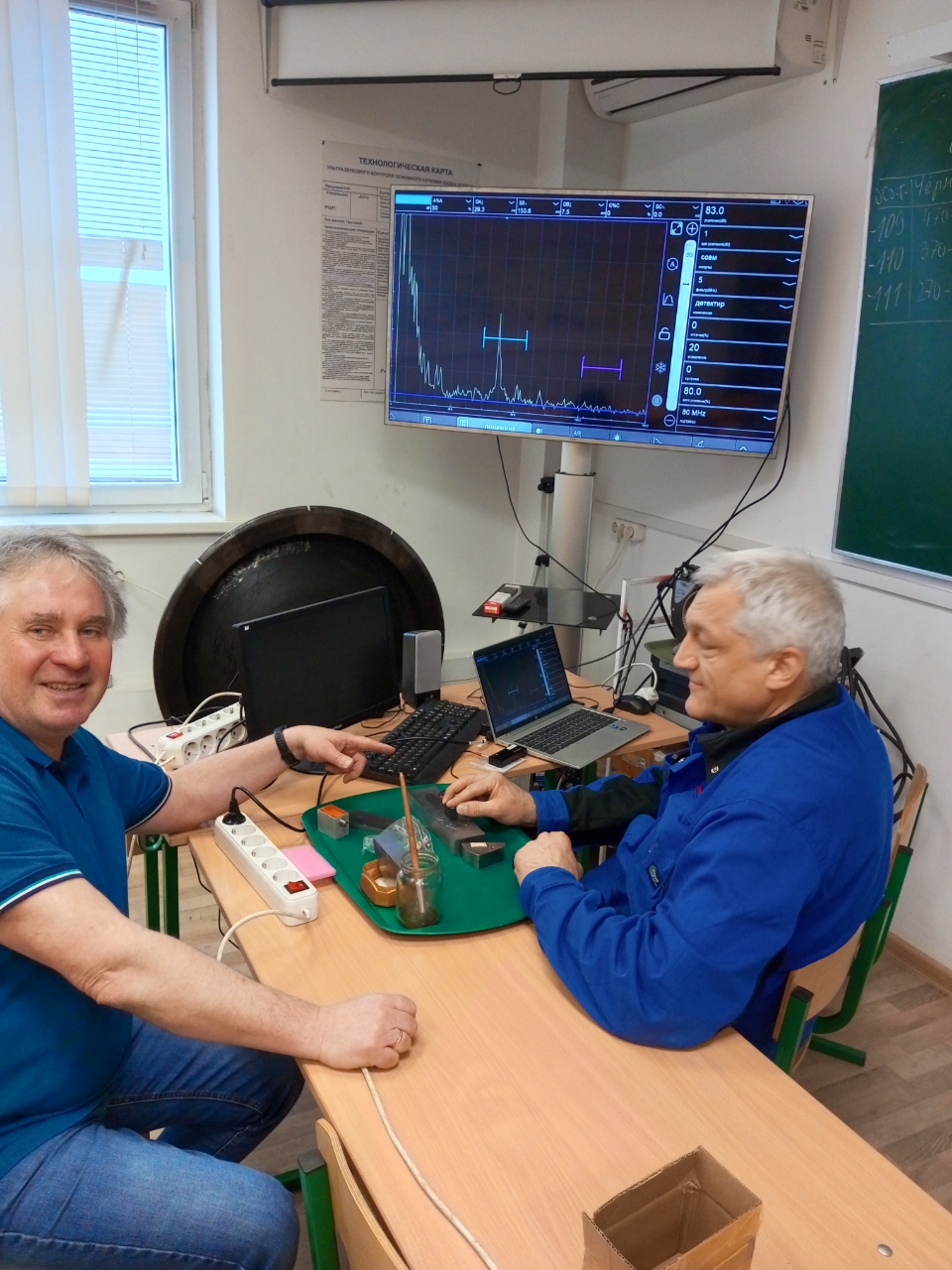
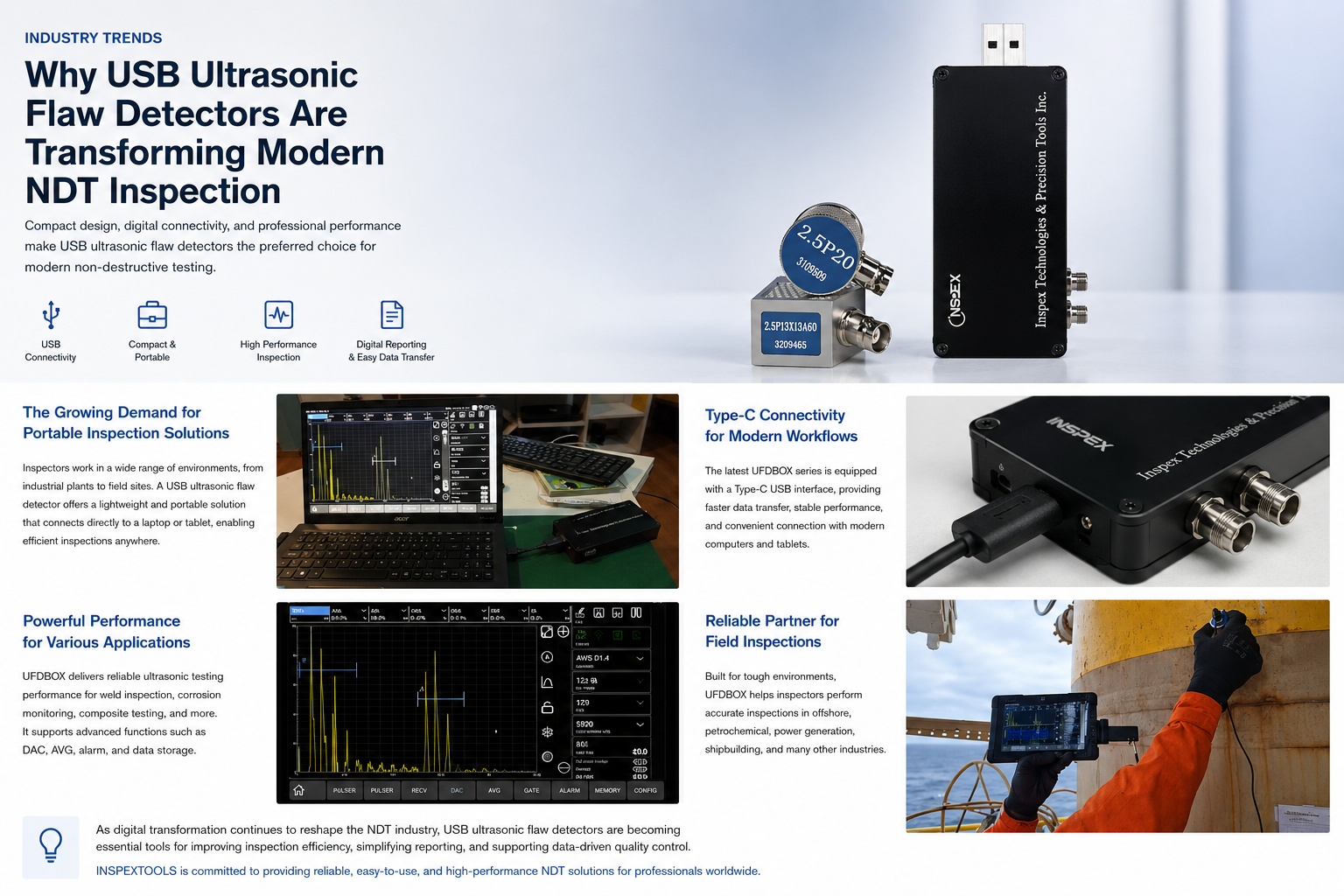
Unlike conventional standalone instruments, USB-based ultrasonic flaw detectors connect directly to a laptop or industrial computer, combining professional ultrasonic testing capabilities with the computing power of modern devices. This approach simplifies inspection workflows while reducing equipment size and improving portability.
The Growing Demand for Portable Inspection Solutions
Industrial inspections are no longer confined to laboratories or fixed production lines. Inspectors frequently work in manufacturing plants, construction sites, power stations, oil and gas facilities, and maintenance environments where lightweight equipment offers significant advantages.
A portable USB ultrasonic flaw detector allows technicians to carry less equipment while maintaining high inspection performance. With only a compact detector, a probe, and a computer, inspections can be performed efficiently in almost any environment.
The smaller footprint also makes transportation easier for service providers who perform inspections at multiple customer locations.
Digital Workflows Improve Productivity
Modern quality management requires more than simply detecting internal defects. Inspection reports must be accurate, traceable, and easy to share across engineering teams.
USB ultrasonic flaw detectors support digital inspection workflows by providing features such as:
Real-time A-scan display
Waveform storage
Inspection data recording
Fast report generation
Software-based parameter adjustment
Easy transfer of inspection files
Digital documentation helps reduce manual paperwork while improving consistency and traceability throughout the inspection process.
Reliable Performance for Multiple Inspection Applications
Ultrasonic testing remains one of the most effective methods for detecting internal discontinuities without damaging the tested component.
USB ultrasonic flaw detectors are widely used for:
Weld inspection
Steel structure inspection
Pressure vessel examination
Pipeline maintenance
Forging inspection
Casting inspection
Rail transportation maintenance
Aerospace component evaluation
Manufacturing quality control
Because ultrasonic testing provides immediate feedback, inspectors can quickly identify internal defects such as cracks, lack of fusion, porosity, and inclusions before components enter service.
Cost-Effective Without Compromising Capability
Many inspection companies are looking for equipment that balances performance, portability, and investment cost.
USB ultrasonic flaw detectors eliminate unnecessary hardware by utilizing an external computer for display and data processing. This design can lower equipment costs while still supporting advanced inspection functions commonly required in industrial testing, including:
DAC evaluation
Multiple measurement gates
Alarm functions
High-speed waveform acquisition
Data storage and export
Software upgrades
For organizations building digital inspection systems, USB-based instruments provide an efficient and scalable solution.
Supporting the Future of Smart NDT
As Industry 4.0 continues to reshape manufacturing and maintenance, inspection equipment is becoming increasingly connected and software-driven.
Today's NDT professionals expect instruments that integrate easily with digital reporting systems, allow rapid data sharing, and simplify equipment maintenance through software updates. USB ultrasonic flaw detectors fit naturally into these modern inspection workflows by combining compact hardware with flexible software capabilities.
The trend toward digitalization is expected to continue as companies place greater emphasis on inspection efficiency, data accuracy, and long-term asset management.
Choosing the Right USB Ultrasonic Flaw Detector
Selecting the right ultrasonic testing equipment depends on several factors, including inspection requirements, operating environment, software functionality, and compatibility with different ultrasonic probes.
When evaluating a USB ultrasonic flaw detector, buyers should consider:
Detection sensitivity
Signal stability
Frequency range
Data management features
Software usability
Calibration support
Long-term technical service
A well-designed inspection system should provide accurate measurements while remaining easy to operate in both workshop and field environments.
Conclusion
USB ultrasonic flaw detectors represent an important step in the evolution of modern non-destructive testing. Their combination of portability, digital connectivity, and professional inspection capability makes them an attractive choice for manufacturers, inspection companies, maintenance teams, and quality control professionals.
As industrial inspections continue to move toward digital workflows, compact USB-based ultrasonic testing equipment will play an increasingly important role in improving productivity, simplifying reporting, and supporting more efficient asset inspection across a wide range of industries.