
Ends Monday: $100 off any dining table + 2 sets of chairs.

Carrito

¡Su cesta de la compra aún no tiene ningún producto!

  • Jul 29,2026

Top 5 Mistakes When Using a Portable Leeb Hardness Tester (And How to Avoid Them)

Top 5 Mistakes When Using a Portable Leeb Hardness Tester (And How to Avoid Them)

Top 5 Mistakes When Using a Portable Leeb Hardness Tester (And How to Avoid Them)

Introduction

Portable Leeb hardness testers have become an essential tool for modern metal inspection. With their compact design, fast measurement speed, and non-destructive testing capability, they are widely used in industries such as manufacturing, oil and gas, power generation, automotive, aerospace, and heavy equipment maintenance.

Unlike traditional hardness testing methods that often require laboratory conditions and sample preparation, portable Leeb hardness testers allow inspectors to perform measurements directly on large components, machinery parts, and structures in the field.

However, even advanced hardness testing equipment can produce inaccurate results if the testing procedure is not performed correctly.

Many measurement errors are not caused by the instrument itself, but by improper surface preparation, incorrect testing methods, or unsuitable testing conditions.

In this article, we will discuss five common mistakes when using a portable Leeb hardness tester and provide practical solutions to improve measurement accuracy and reliability.
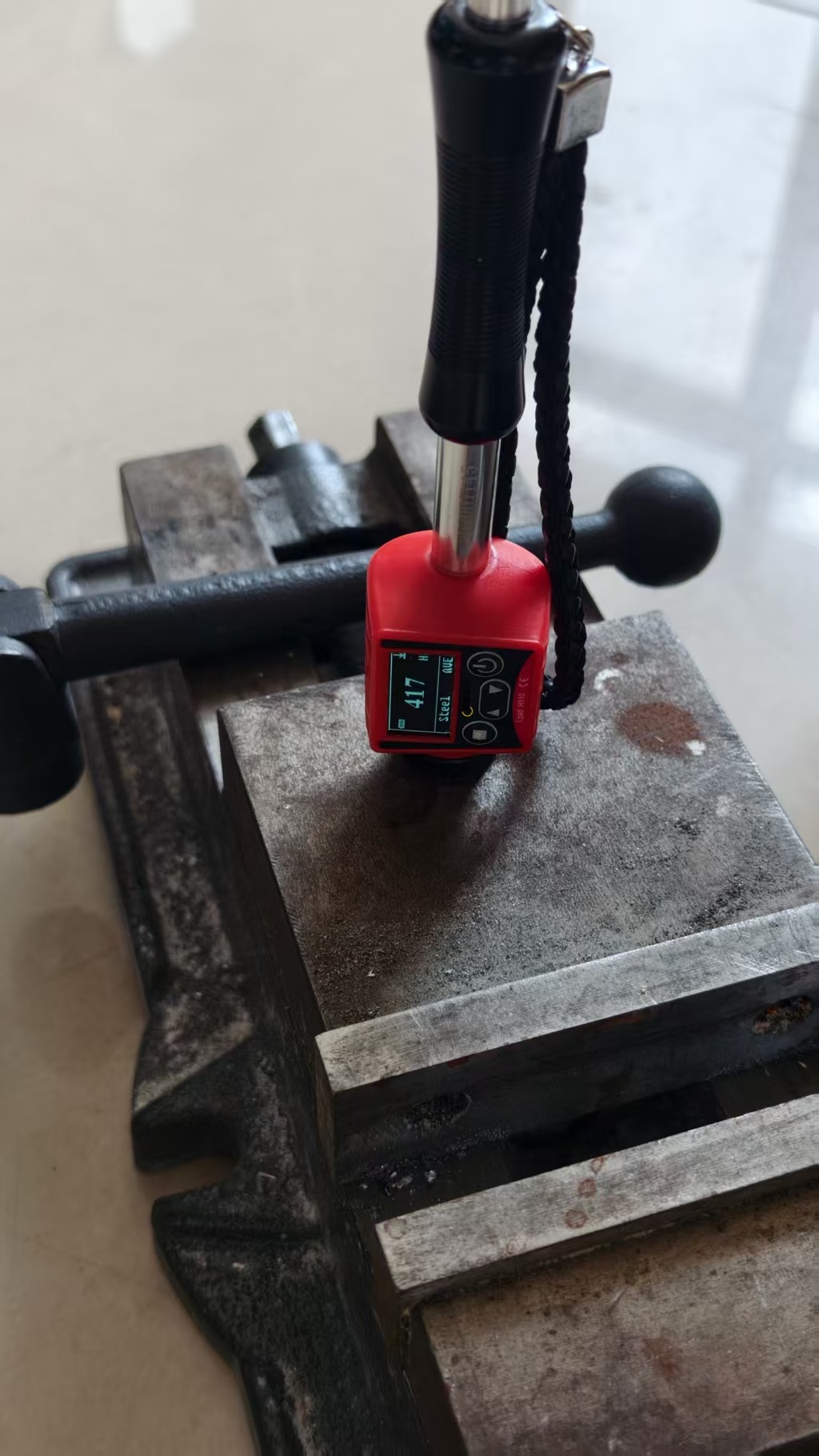
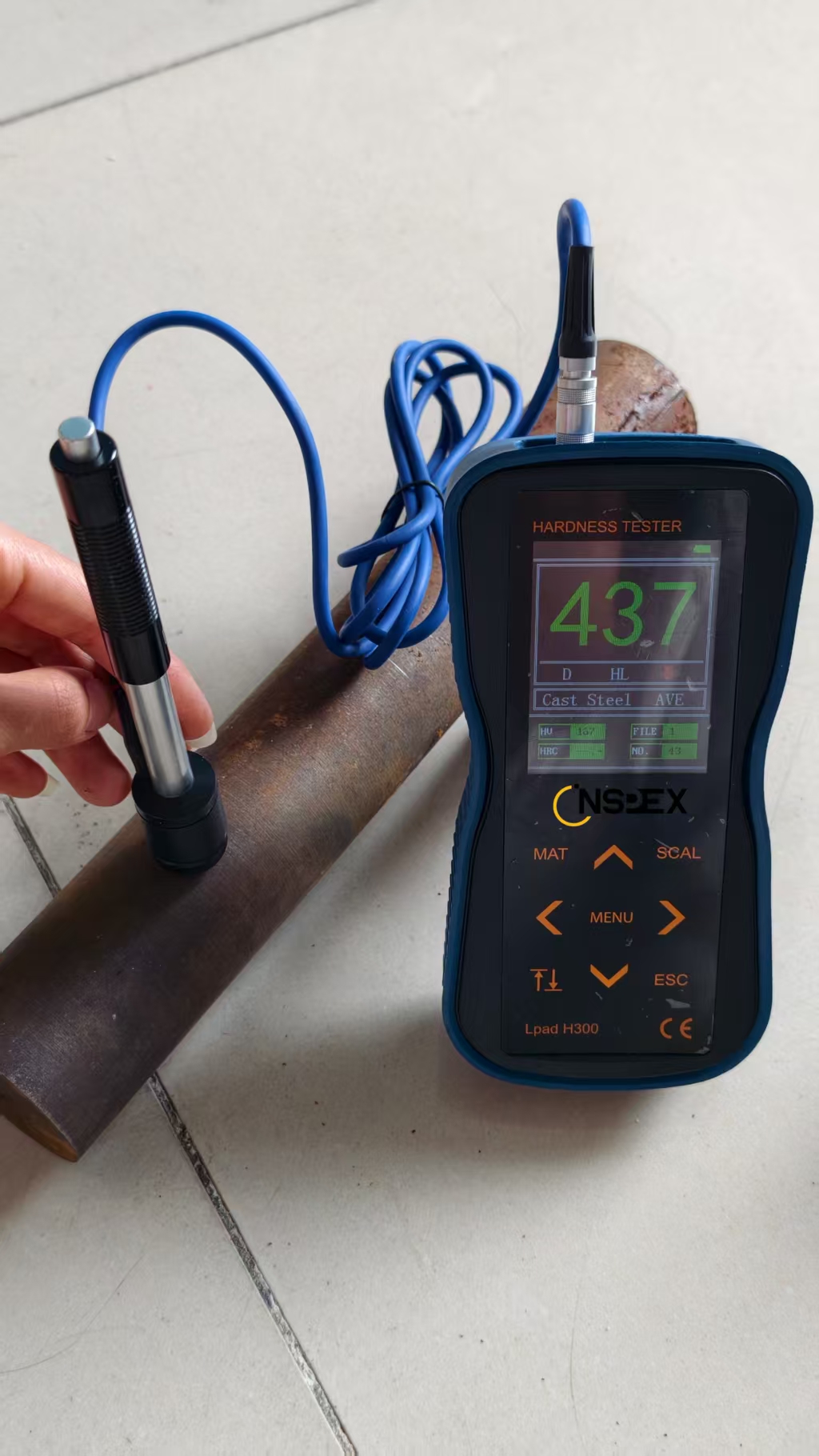
portable-leeb-hardness-tester-steel-testing..jpg

1. Testing on Rough, Dirty, or Coated Surfaces

Surface condition is one of the most important factors affecting Leeb hardness measurement accuracy.

A Leeb hardness tester works by measuring the rebound velocity of an impact body after it strikes the test surface. If the surface contains rust, paint, oil, scale, or excessive roughness, the impact energy may be absorbed or affected, resulting in inaccurate readings.

Common surface conditions that may influence measurement results include:

  • Rust and corrosion
  • Paint coatings
  • Oil or grease contamination
  • Welding residue
  • Heavy oxidation
  • Uneven machining marks

Best Practice:

Before testing:

  • Clean the inspection area thoroughly.
  • Remove coatings or rust when necessary.
  • Ensure the surface is smooth and stable.
  • Avoid testing on damaged or uneven areas.

Proper surface preparation helps improve repeatability and ensures more reliable hardness values.
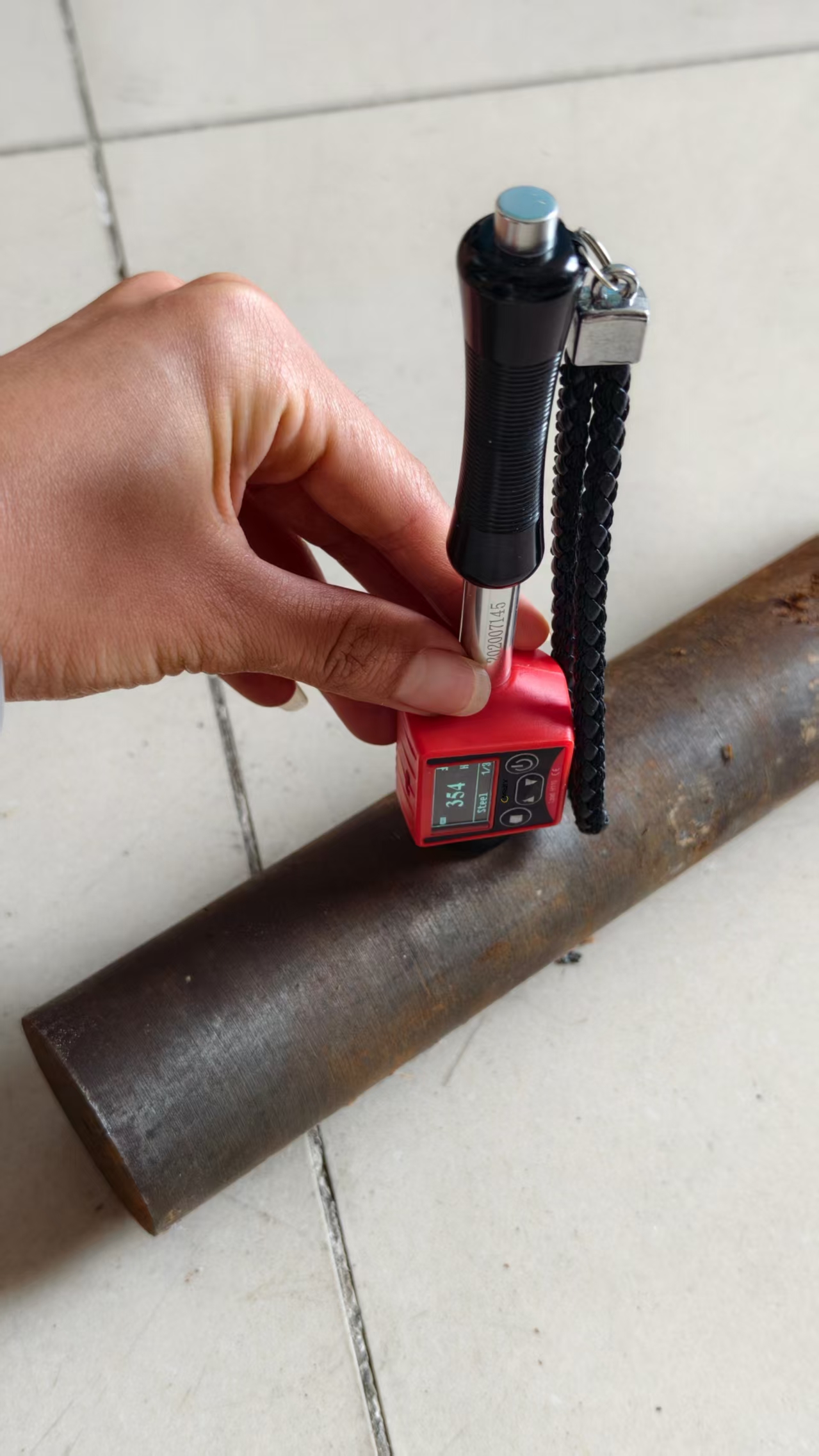
surface-preparation-leeb-hardness-testing.jpg

2. Testing Components That Are Too Thin or Unstable

Another common mistake is testing components that do not provide enough support.

During Leeb hardness testing, the impact force must be absorbed by the material. If the component is too thin, lightweight, or poorly supported, vibration and movement can affect the rebound process and cause incorrect readings.

Examples of challenging applications include:

  • Thin metal plates
  • Small components
  • Lightweight aluminum parts
  • Unsupported workpieces

Best Practice:

To achieve reliable results:

  • Make sure the workpiece has sufficient thickness and rigidity.
  • Secure small components properly before testing.
  • Use additional support when required.
  • Follow the recommended testing range for the selected impact device.

Stable contact between the test surface and the material is essential for accurate measurements.

3. Ignoring Impact Direction Compensation

The impact direction can influence Leeb hardness measurement results because gravity affects the movement of the impact body.

Measurements taken in different orientations, such as:

  • Vertical downward
  • Horizontal
  • Vertical upward

may produce slightly different results if compensation is not applied correctly.

Modern portable Leeb hardness testers often include automatic impact direction compensation, which helps reduce measurement errors during field inspections.

Best Practice:

During testing:

  • Keep the impact device perpendicular to the test surface.
  • Confirm the impact direction setting.
  • Avoid tilting or unstable positioning.
  • Use automatic direction compensation when available.

Consistent testing technique improves measurement repeatability.

4. Skipping Calibration and Verification Checks

Regular calibration verification is essential for maintaining measurement confidence.

Although portable hardness testers are designed for long-term reliability, environmental conditions, transportation, or extended use may affect measurement performance over time.

Skipping verification checks can result in unnoticed measurement deviations.

Best Practice:

Use a certified hardness test block to verify instrument performance:

  • Before important inspections
  • After transportation
  • After replacing impact devices
  • During routine maintenance checks

Regular verification ensures that hardness measurements remain accurate and traceable.
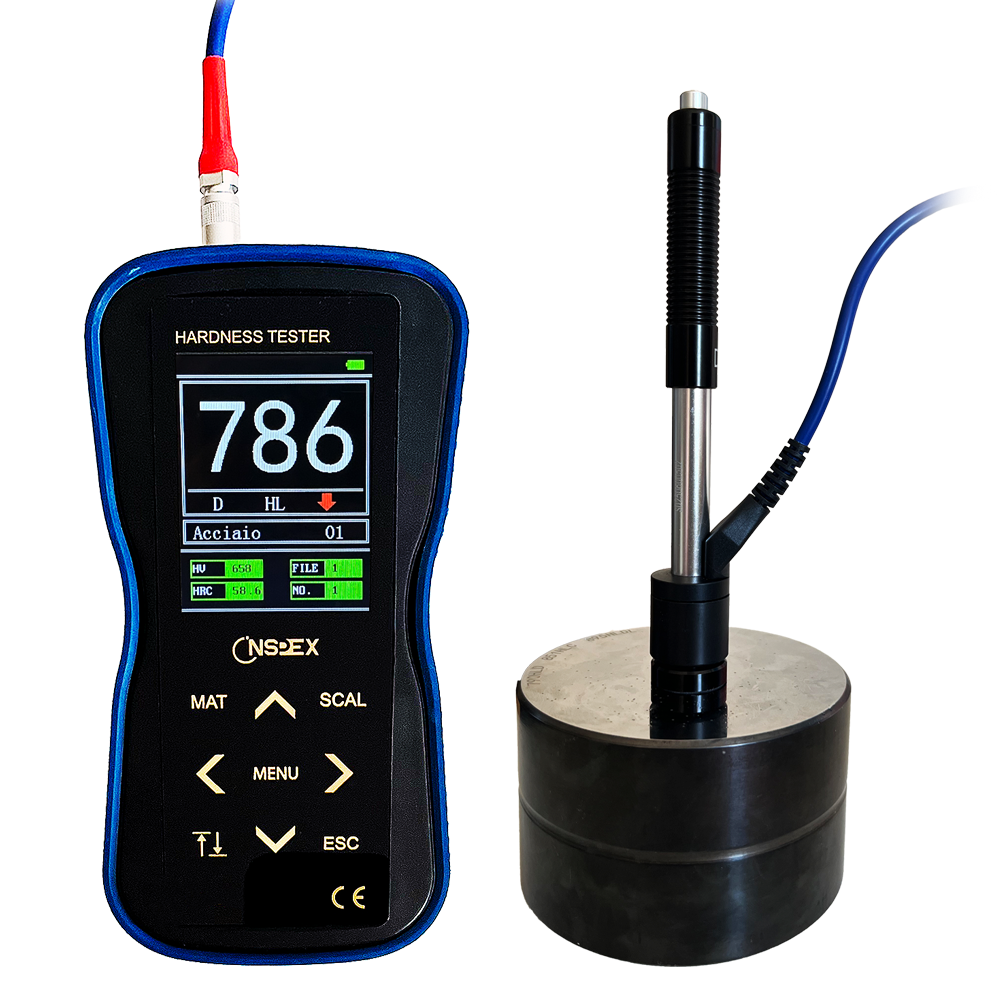
3.png

5. Selecting the Wrong Material Conversion Scale

Portable Leeb hardness testers usually provide conversion between different hardness scales, including:

  • HRC (Rockwell C)
  • HRB (Rockwell B)
  • HB (Brinell)
  • HV (Vickers)

However, conversion values depend heavily on the material being tested.

Using the wrong material setting or conversion scale may result in inaccurate hardness values.

For example, steel conversion tables should not be applied directly to aluminum or other non-ferrous materials.

Best Practice:

Before measurement:

  • Confirm the material type.
  • Select the correct material setting.
  • Choose the appropriate hardness scale.
  • Record the original Leeb hardness value (HL) whenever possible.

Correct material selection is critical for obtaining meaningful converted hardness values.

Additional Tip: Maintain Consistent Testing Technique

Besides avoiding the five mistakes above, consistent testing technique plays an important role in measurement accuracy.

Inspectors should:

  • Hold the impact device firmly.
  • Apply stable pressure.
  • Keep the probe perpendicular to the surface.
  • Avoid movement during impact.
  • Take multiple readings when necessary.

A proper testing method combined with a reliable instrument helps achieve accurate and repeatable inspection results.

Conclusion

Portable Leeb hardness testers provide a fast, convenient, and non-destructive solution for metal hardness inspection.

However, accurate measurement depends not only on the instrument but also on proper testing procedures.

By avoiding common mistakes such as poor surface preparation, unstable testing conditions, incorrect impact direction, insufficient calibration checks, and improper material selection, inspectors can significantly improve measurement reliability.

Whether used for quality control, maintenance inspection, or field testing, following correct hardness testing practices ensures more consistent and trustworthy results.
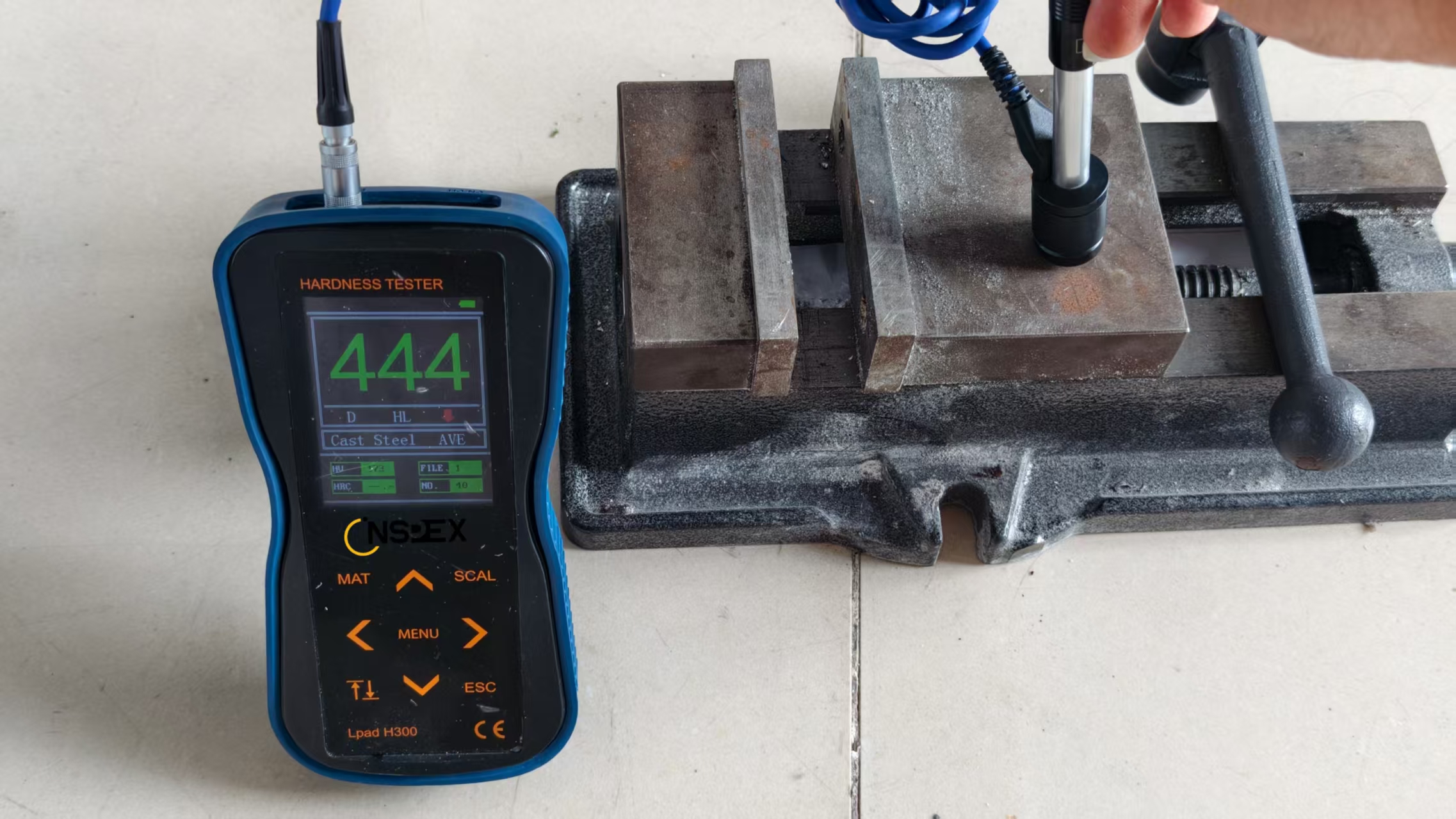
20260729153051_877_19.jpg


We use cookie to improve your online experience. By continuing to browse this website, you agree to our use of cookie.

Cookies

Please read our Terms and Conditions and this Policy before accessing or using our Services. If you cannot agree with this Policy or the Terms and Conditions, please do not access or use our Services. If you are located in a jurisdiction outside the European Economic Area, by using our Services, you accept the Terms and Conditions and accept our privacy practices described in this Policy.
We may modify this Policy at any time, without prior notice, and changes may apply to any Personal Information we already hold about you, as well as any new Personal Information collected after the Policy is modified. If we make changes, we will notify you by revising the date at the top of this Policy. We will provide you with advanced notice if we make any material changes to how we collect, use or disclose your Personal Information that impact your rights under this Policy. If you are located in a jurisdiction other than the European Economic Area, the United Kingdom or Switzerland (collectively “European Countries”), your continued access or use of our Services after receiving the notice of changes, constitutes your acknowledgement that you accept the updated Policy. In addition, we may provide you with real time disclosures or additional information about the Personal Information handling practices of specific parts of our Services. Such notices may supplement this Policy or provide you with additional choices about how we process your Personal Information.


Cookies

Cookies are small text files stored on your device when you access most Websites on the internet or open certain emails. Among other things, Cookies allow a Website to recognize your device and remember if you've been to the Website before. Examples of information collected by Cookies include your browser type and the address of the Website from which you arrived at our Website as well as IP address and clickstream behavior (that is the pages you view and the links you click).We use the term cookie to refer to Cookies and technologies that perform a similar function to Cookies (e.g., tags, pixels, web beacons, etc.). Cookies can be read by the originating Website on each subsequent visit and by any other Website that recognizes the cookie. The Website uses Cookies in order to make the Website easier to use, to support a better user experience, including the provision of information and functionality to you, as well as to provide us with information about how the Website is used so that we can make sure it is as up to date, relevant, and error free as we can. Cookies on the Website We use Cookies to personalize your experience when you visit the Site, uniquely identify your computer for security purposes, and enable us and our third-party service providers to serve ads on our behalf across the internet.

We classify Cookies in the following categories:
 ●  Strictly Necessary Cookies
 ●  Performance Cookies
 ●  Functional Cookies
 ●  Targeting Cookies


Cookie List
A cookie is a small piece of data (text file) that a website – when visited by a user – asks your browser to store on your device in order to remember information about you, such as your language preference or login information. Those cookies are set by us and called first-party cookies. We also use third-party cookies – which are cookies from a domain different than the domain of the website you are visiting – for our advertising and marketing efforts. More specifically, we use cookies and other tracking technologies for the following purposes:

Strictly Necessary Cookies
These cookies are necessary for the website to function and cannot be switched off in our systems. They are usually only set in response to actions made by you which amount to a request for services, such as setting your privacy preferences, logging in or filling in forms. You can set your browser to block or alert you about these cookies, but some parts of the site will not then work. These cookies do not store any personally identifiable information.

Functional Cookies
These cookies enable the website to provide enhanced functionality and personalisation. They may be set by us or by third party providers whose services we have added to our pages. If you do not allow these cookies then some or all of these services may not function properly.

Performance Cookies
These cookies allow us to count visits and traffic sources so we can measure and improve the performance of our site. They help us to know which pages are the most and least popular and see how visitors move around the site. All information these cookies collect is aggregated and therefore anonymous. If you do not allow these cookies we will not know when you have visited our site, and will not be able to monitor its performance.

Targeting Cookies
These cookies may be set through our site by our advertising partners. They may be used by those companies to build a profile of your interests and show you relevant adverts on other sites. They do not store directly personal information, but are based on uniquely identifying your browser and internet device. If you do not allow these cookies, you will experience less targeted advertising.

How To Turn Off Cookies
You can choose to restrict or block Cookies through your browser settings at any time. Please note that certain Cookies may be set as soon as you visit the Website, but you can remove them using your browser settings. However, please be aware that restricting or blocking Cookies set on the Website may impact the functionality or performance of the Website or prevent you from using certain services provided through the Website. It will also affect our ability to update the Website to cater for user preferences and improve performance. Cookies within Mobile Applications

We only use Strictly Necessary Cookies on our mobile applications. These Cookies are critical to the functionality of our applications, so if you block or delete these Cookies you may not be able to use the application. These Cookies are not shared with any other application on your mobile device. We never use the Cookies from the mobile application to store personal information about you.

If you have questions or concerns regarding any information in this Privacy Policy, please contact us by email at . You can also contact us via our customer service at our Site.